Saturday, April 02, 2011

Twitter and breaking aviation news

This week was a bad one for Sun 'n Fun. The first part of the week had more than its fair share of rain and then it all came to a head with the sever thunderstorm and possible tornado on Thursday. I happened to be on twitter when the storm started to hit the airfield and the #snf11 hashtag was going crazy.

I watched as the first hand accounts of what was being seen were posted along with accompanying pictures. It was incredible to follow along. Shortly after things calmed down people started asking if they had seen or heard from various friends who were on the grounds of the fly in. It was great to see the general aviation community come together and check up on one another. The common thread of aviation brings so many people together from so many different backgrounds, it is not something that is easily found elsewhere.

If you are not on Twitter you should most certainly check it out. There some many neat people out there who help keep each other updated on what is happening in the industry. It is a great community and if you are not there come on and join us. There is always room for more.

Sunday, January 09, 2011

A Teterboro Sunset (KTEB)


This picture was taken by my friend Tom, a Falcon 50 pilot. He will be providing more images of the corporate pilot's life in the upcoming months. Check back soon!

Tuesday, January 04, 2011

5 Favorite Aviation Books

I was just looking over my list of books that I have read on Goodreads.com. Recently I was sitting around with a friend and we were talking about the five best books that we have ever read. It was a fun discussion and much time was spent questioning each others selections.

So now I will give you my selection of the five books that I think all pilots should have on their bookshelves. They are in no particular order.

1. Fate Is The Hunter by Ernest K. Gann

2. Stick and Rudder: An Explanation of the Art of Flying by Wolfgang Langewiesche

3. Chickenhawk by Robert Mason

4. Airplane Flying Handbook by The FAA

5. Flight of Passage by Rinker Buck

Monday, January 03, 2011

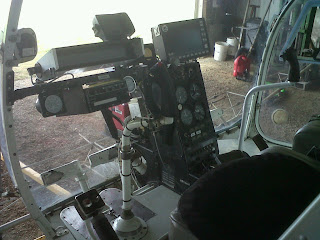
Bell 47 Crop Duster

The cockpit of a Bell 47 helicopter used for crop dusting.
Sent via BlackBerry from T-Mobile

Winter Flying

Living in the Northern Illinois area we get to spend a good part of the year dealing with cold weather.  Flying in the winter is one of those things that take a little extra work but is well worth the time and effort.  Some of the benefits include the increased performance, smoother air, lighter rental schedules, and the beauty of flying over the snow covered landscape.

On the flip side of winter flying is the extra time it takes to preheat the engine, the potential hassle of moving the aircraft around on snow covered ramp areas, and the sometimes painful task of doing a preflight outside.

If winter flying is new to you it is best to get the help from an experienced flight instructor who can help you do winter flying the right way. The FAA has a tip sheet on winter flying that is worth taking the time to read and study even if you are a seasoned winter flyer. Take a look at it here: FAA Winter Flying Tips.

Do not miss the chance to go out and enjoy the best that the cold weather has to offer, we will be complaining about heat and density altitude before we know it.

Wednesday, December 29, 2010

FlightPrep and other GA divisions.

FlightPrep has recently been the target of boycotts.  I have no problem with people doing that, FlightPrep has chosen to cause problems in general aviation at a time when we need to work together.  Avweb has also been guilty of causing divisions in GA with its recent attack on AOPA.  I think that it is one thing for businesses to compete and try and provide better products at better prices or at least creating a better value for the consumer.  But it appears that FlightPrep is trying to bully its way into a larger market share and that is not the way to do it in a small niche market such as General Aviation.  It will be interesting to see how all of this shakes out.


Boycott FlightPrep

Saturday, February 13, 2010

AOPA's Guide to the Flight Review

It is amazing how quick 24 calendar months goes by and it is time for another flight review.  I have just scheduled mine for early March and am going to do it in a Piper Seminole.  This year I will just do the standard flight review with at least an hour ground instruction and an at least an hour of flight.

Over the years I have used several different methods for completing the requirements for the flight review including using the FAA Wings Program and getting additional ratings.  AOPA has produced a great guide to the flight review that lists all of the requirments and outlines the alternatives to doing a traditional flight review.  It is available free online in a PDF file, check it out here, AOPA  Pilot's Guide to the Flight Review.

Saturday, January 30, 2010

New Instrument Rating Practical Test Standards FAA-S-8081-4E

The FAA has updated the Instrument Rating Practical Test Standards effective January 1, 2010.
The new update includes what they refer to as major enhancements. These include:
  • Added abbreviations
  • Added special emphasis area of icing hazards
  • Changed Aeronautical Decision Making and Risk Management to a new Single-Pilot Resource Management
  • Updated area of operation I to include Pilot Qualifications
  • Modified task items to standardize phraseology as contained in the AIM
  • Added a Judgment Assessment Matrix to the Appendix
The updated book is available at http://www.pilotstore.com

Monday, November 30, 2009

Positive Aircraft Control

The first special emphasis area listed on the Practical Test Standards is Positive Aircraft Control. At first glance this might seem like a simple thing that does not take much thought. We simply fly the airplane, how hard is that?

I have learned over past few years how difficult it can be when I started flying for an aerial photographer. He owns a Cessna 172 that has a hole in the bottom for doing vertical shots and he will sit in either the left or right seat for others. The flying is done at mostly lower altitudes and most of it is around or in Class B Airspace. It can get very busy very quickly, you are doing a lot of radio communications, always making sure that you are at the correct altitude for the airspace, you are also communicating with the photographer, and at times doing some low altitude steep turns in order to get the right shot all this while looking out for other traffic. It is so easy to focus on just one thing while doing this and then notice that the altitude is creeping up close to the floor of the next airspace or the airspeed had dropped off while you were looking outside and steepening a turn to make sure the building that he is shooting is in proper spot.

The FAA now has a course that you can take that will help you be more aware of Positive Aircraft Control. Take a look at it here: Positive Aircraft Control.The course also includes information on in flight distractions that examiners will use on checkrides so if you have one coming up or are recommending a student for one soon do yourself a favor and take a look at it.

Saturday, November 28, 2009

Positive Exchange of Flight Controls

A friend and I were flying over the Appalachian Mountains looking for a small airport, this was before we all had a GPS on board. It is a nice smooth day, the Cessna 172 was well trimmed and we are both looking at the sectional trying to find the airport that is hidden from us. Then he looked at me and asked a very important question, "Who is flying the airplane?"

Here we were two pilots flying in an unfamiliar area around mountains and we got so focused on the chart we forgot to fly the airplane for a moment. It happened so quickly and so easily I can see why the FAA has made Positive Exchange of Flight Controls a special emphasis area in the Practical Test Standards. Exchanging flight controls is something that takes place a lot during flight training. The instructor will demonstrate a maneuver and then will hand the controls of the airplane back to the student many times during a single lesson. This is how the FAA recommends an exchange of flight controls:

During flight training, there must always be a clear understanding between students and flight instructors of who has control of the aircraft. Prior to flight, a briefing should be conducted that includes the procedure for the exchange of flight controls. A positive three-step process in the exchange of flight controls between pilots is a proven procedure and one that is strongly recommended.

When the instructor wishes the student to take control of the aircraft, he/she will say “You have the flight controls.” The student acknowledges immediately by saying, “I have the flight controls.” The flight instructor again says “You have the flight controls.” When control is returned to the instructor, follow the same procedure. A visual check is recommended to verify that the exchange has occurred. There should never be any doubt as to who is flying the aircraft.

It might sound silly to keep saying "You have the controls" "I have the controls" but it helps reduce the chance of you ever having to ask "Who is flying the airplane".

Thursday, November 26, 2009

Chicago Music

No matter where I have been whenever I walk off of an airplane at O'Hare(ORD) I feel like I am home. Things look familiar, The Chicago Tribune is at the news stands, Cubs and Bears shirts and hats are for sale in the shops and if in the right place you can get a whiff of Garrett Popcorn. (Terminal 1 Concourse B or Terminal 3 Concourse H)

Now there is one more reason I can enjoy my time at ORD and so can you, music. Terminal Tunes is a new program where only music from Chicago area artists is played in the terminals at O'Hare and Midway. When you hear something that you like you can go to the website and search by terminal, day and time and see what was being played and then listen to a short sample. Take a look at the website at Terminal Tunes. What a great way to get to know Chi Town!

Wednesday, November 25, 2009

Yea, there's an app for that

I just came across a website that lists several hundred apps for the iPhone or iTouch. It started out as just a simple list and now features some commentary on select apps. There was also a contest recently for a free app for being able to identify an unusual airplane. Check it out at AviatorApps.com.

Tuesday, November 24, 2009

Bird strikes suck but what about the deer strikes.

Recently I sent an e-mail to some friends with pictures of an airplane that experienced a bird strike on an approach into Show Low, AZ.

A friend responded by telling me that he had recently hit a deer and had done over $1500 worth of damage to his car. He closed by asking if he could ever have a deer strike with his airplane. Well, the answer is yes, yes you can. Here is a video posted on YouTube of a Cessna hitting a deer on landing: Deer Strike.

Monday, November 23, 2009

Max Trescott's Garmin G1000 Glass Cockpit Handbook

My school is getting an Elite G1000 Simulator in about a week. This is a great sim that features an actual Garmin G1000 unit and is enclosed like their RC-1 simulator. I will post some pics as soon as it is set up.

In preparation for using this and doing some instruction in it I have been reading the newly updated Garmin G1000 Glass Cockpit Handbook by Max Trescott. This has been a great help in getting up to speed on this unit.

His writing style is very easy to read and the book features plenty of images that help with understanding each chapter. This book is great for a pilot who is looking to get checked out in an airplane with the G1000. It will save at least a few hours of instruction by getting you familiar with location of all of the switches and location of information on the two displays. If you already have some G1000 experience the book gives you some excellent pointers on how to avoid some common user errors.

This book is available from several sources online and at Pilotstore.com!

PAVE

I have been using the FAA's PAVE personal checklist with my students. It is a way for a pilot to analyze four factors that lead to aviation accidents. It stands for:

P - Pilot
A - Aircraft
V - enVironment
E - External Pressures

The students have had to look up accidents from www.NTSB.gov and then talk about which of the four factors lead to the accident. The students have found that in a lot of cases it is more than one that was a factor and they have been able to see the chain of events that lead to the accident.

I will be posting some of the accidents that they use and discuss the factors. It has been a great way for them to learn from others mistakes.

Saturday, July 11, 2009

The Importance of a good Tie Down.

A few years ago I got a call from a good friend who owned a nice Cessna 150. He called to tell me that the airplane had been destroyed during a severe summer thunderstorm. The 150 was flipped upside down and came to rest on a Piper Seneca.

When he went to the airport to inspect the damage he has glad to see that the tiedown ropes were still attached to the airplane and that it was the rope that was provided by the airport that had failed. He figured that that would make the insurance claim a little easier to deal with.

Over the years while walking around GA ramps and I have seen a lot of different ways pilots have tied down their airplanes, some good and some not so good. I have also been told by many people what they consider the right and wrong way to tiedown and secure an airplane kept outside. The FAA has an Advisory Circular on the topic, Tiedown Sense AC 20-35C . This AC is a little dated but still has some great tips on the proper way of securing an airplane kept outside. It is worth taking a look at.

My friend now has a nice Cessna 150 Aerobat and has learned not to take the condition of the tiedown ropes for granted.

Tuesday, June 23, 2009

Aviation on Twitter

It seems like everyone is now on twitter and there are quite a few people who post mostly aviation related items. Here is a list of some of my favorites.

GirlsWithWings: She is the founder of Girls With Wings, a volunteer organization using women in aviation role models to inspire girls to reach their full potential. She is currently participating and an Air Race helping promote women in aviation.

AirPigz: He posts information on a wide variety of aviation topics. You can also go to his blog and see some great videos on building an RV and download his podcasts.

Jetwhine: Rob Mark has some of the best post on twitter. He is an award winning aviation journalist, pilot, professional speaker, and blogger. His blog jetwhine.com is worth following as well.

Pilotstore: They post items regarding aviation news as well as info and links to new aviation products.

You may also want to see if your local airport is out there. My home airport will tweet on things happening around that airport to help keep users up to date.

With twitter you can be as active as you like. Some of us post several things daily but a lot of people just log on to see what others are posting without posting items themselves. You can be as active or as passive on there as you like.

Friday, June 19, 2009

Updated Aviation Weather Services AC00-45F

The FAA has just made some changes to the Aviation Weather Services AC00-45F, Changes 2. The changes are mostly some small additions and a couple of items deleted. It looks like the FAA is going to make a third change in August so it would be good to wait until then to pick up an updated printed copy. It is great to see the FAA doing a much better job of keeping their handbooks up to date and relevant. I hope to spend some time with the new Risk Management Handbook this weekend and will post my thoughts on that early next week.

Tuesday, June 16, 2009

Be Kool with a Kool Scoop


If you fly a low wing airplane and are sweating like crazy while on the ground you need a Kool Scoop. This is a simple device that attaches to the left window and brings in a large volume of air into the cockpit to keep you cool. Pilotstore.com has the Kool Scoop on sale now for 10% off. Take a look at them at Pilotstore.com!